" height="24px" id="mal0FetbB" width="18px"/></svg>)

Application
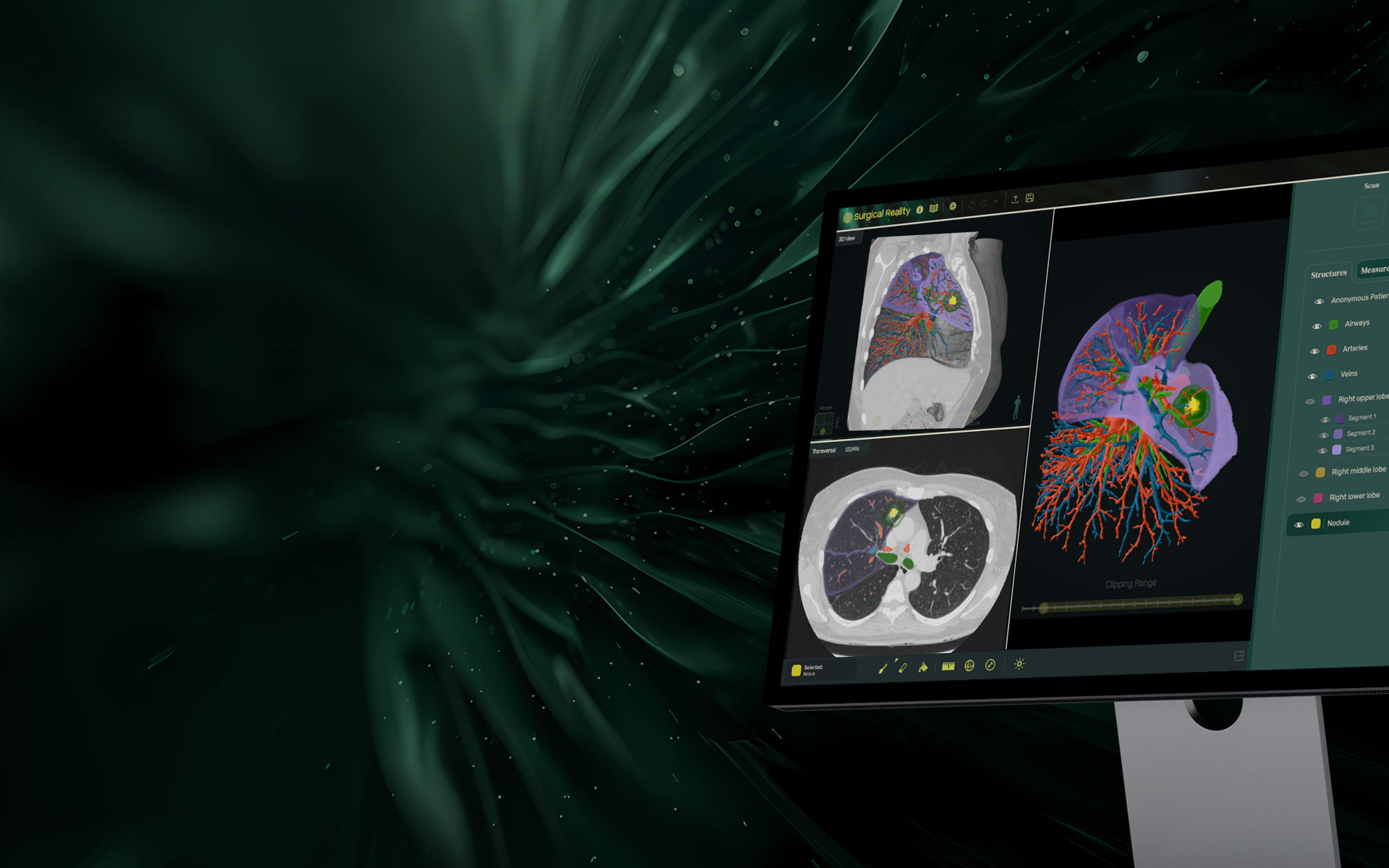
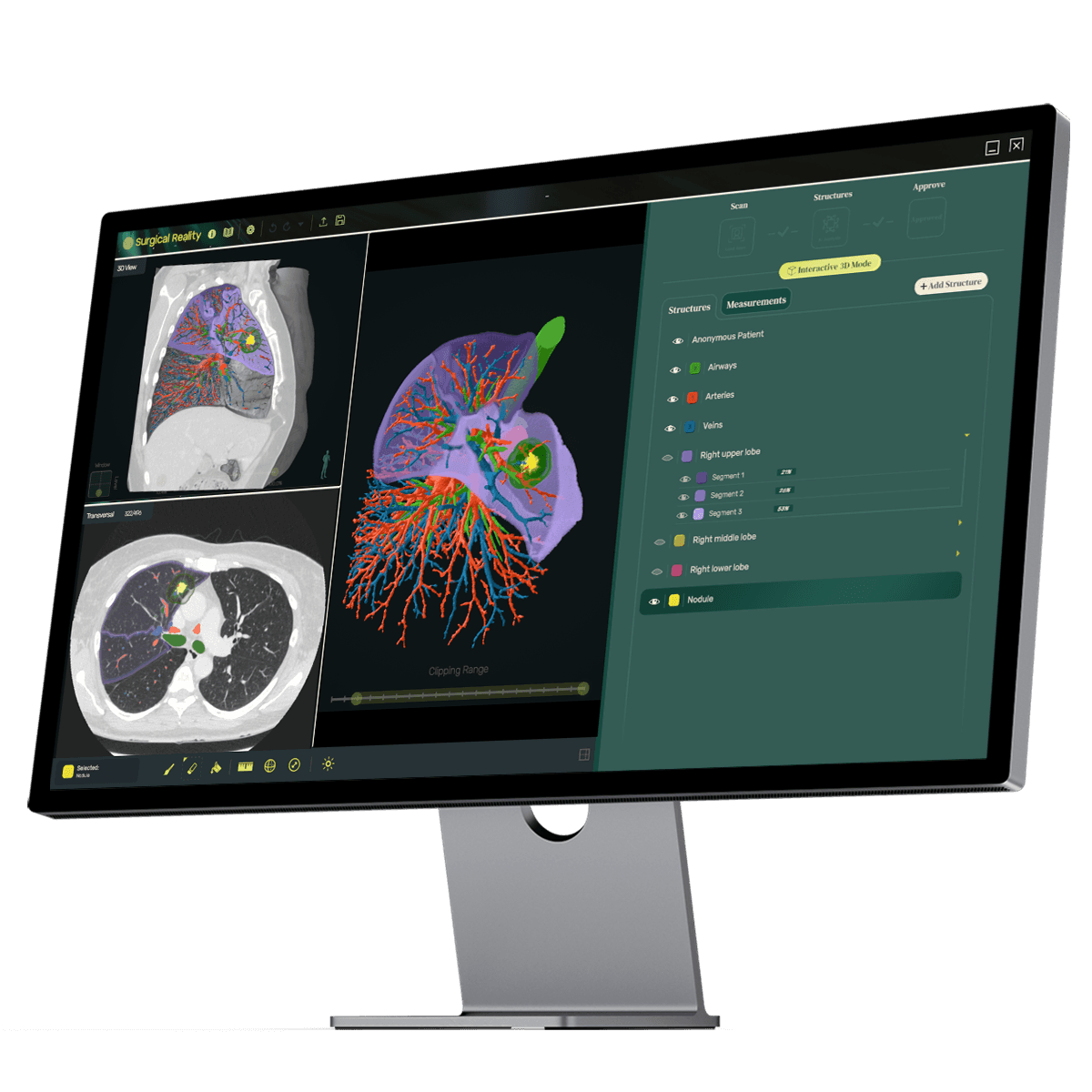
As thoracic surgery shifts toward more complex, lung-sparing procedures like segmentectomies, traditional 2D imaging is no longer enough. Surgical Reality provides the 3D medical imaging tools needed to navigate segmental anatomy with confidence.
Clinical
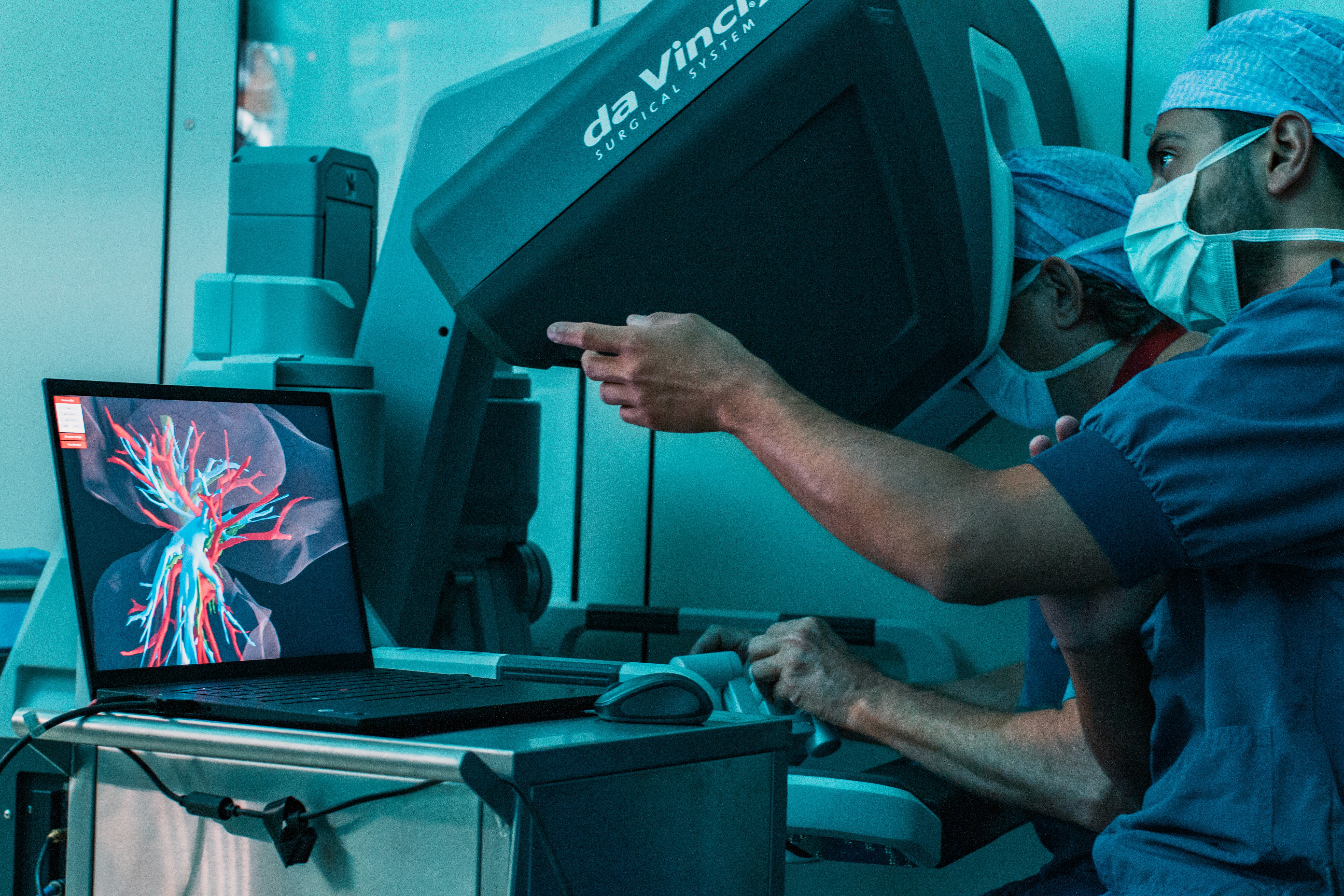
The surgical treatment of early-stage lung cancer is evolving rapidly. Based on clinical studies and international technical guidelines (Brunelli et al., 2023), the standard of care is increasingly shifting from lobectomy toward sublobar resections such as segmentectomy, as well as from open thoracotomy to minimally invasive approaches including VATS and robotic surgery.
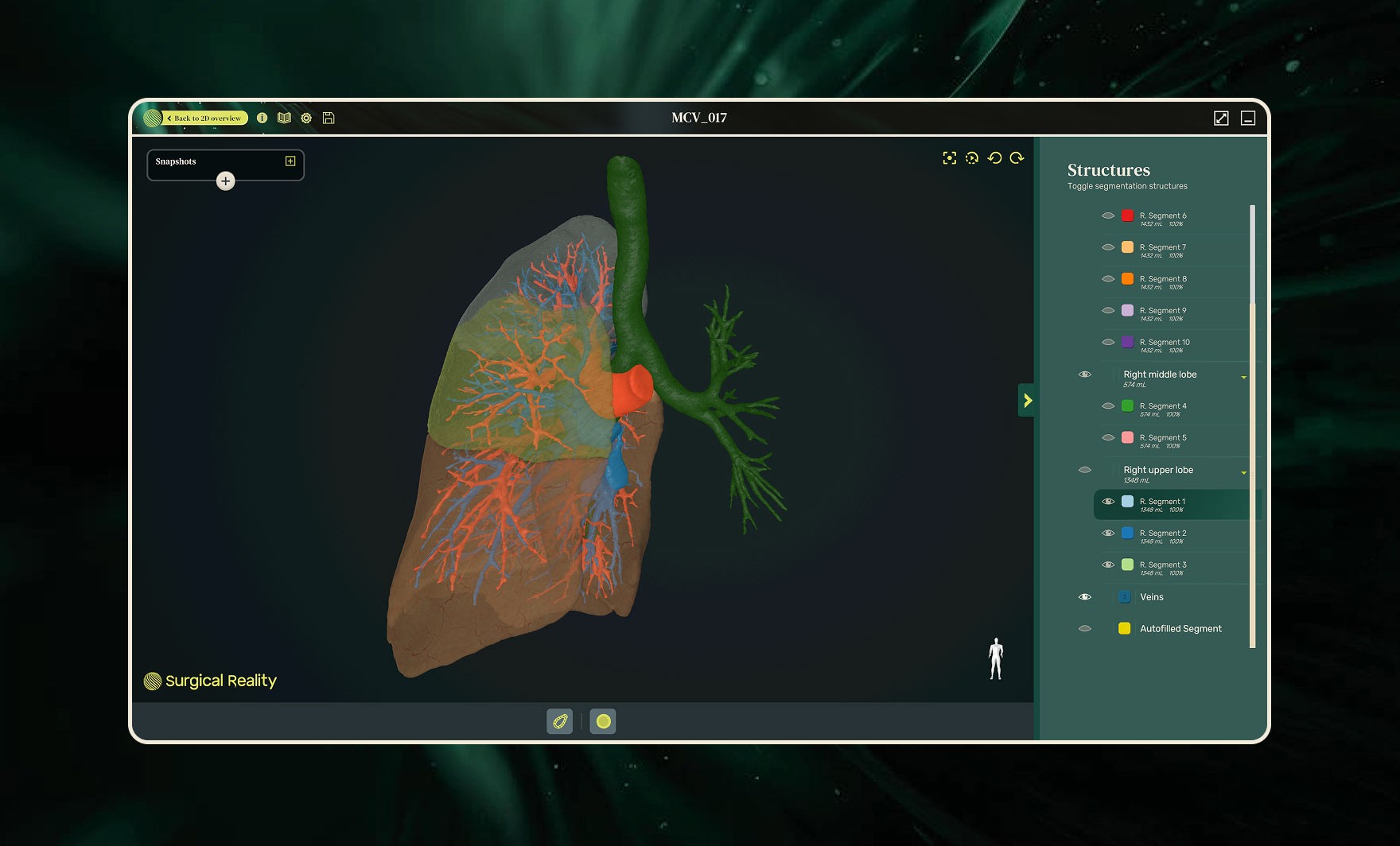
These procedures require a deep understanding of patient-specific anatomical variations, which are often difficult to interpret using conventional CT imaging alone.
Surgical Reality supports this transition by providing patient-specific 3D visualization to enhance anatomical understanding.
The benefits
According to the literature, 3D surgical planning is associated with improved surgical margins, reduced blood loss, and fewer complications, contributing to faster patient recovery.
These benefits extend to all stakeholders involved, including surgeons, hospitals, and patients.
Evidence
Evidence articles